Last updated November 22, 2026
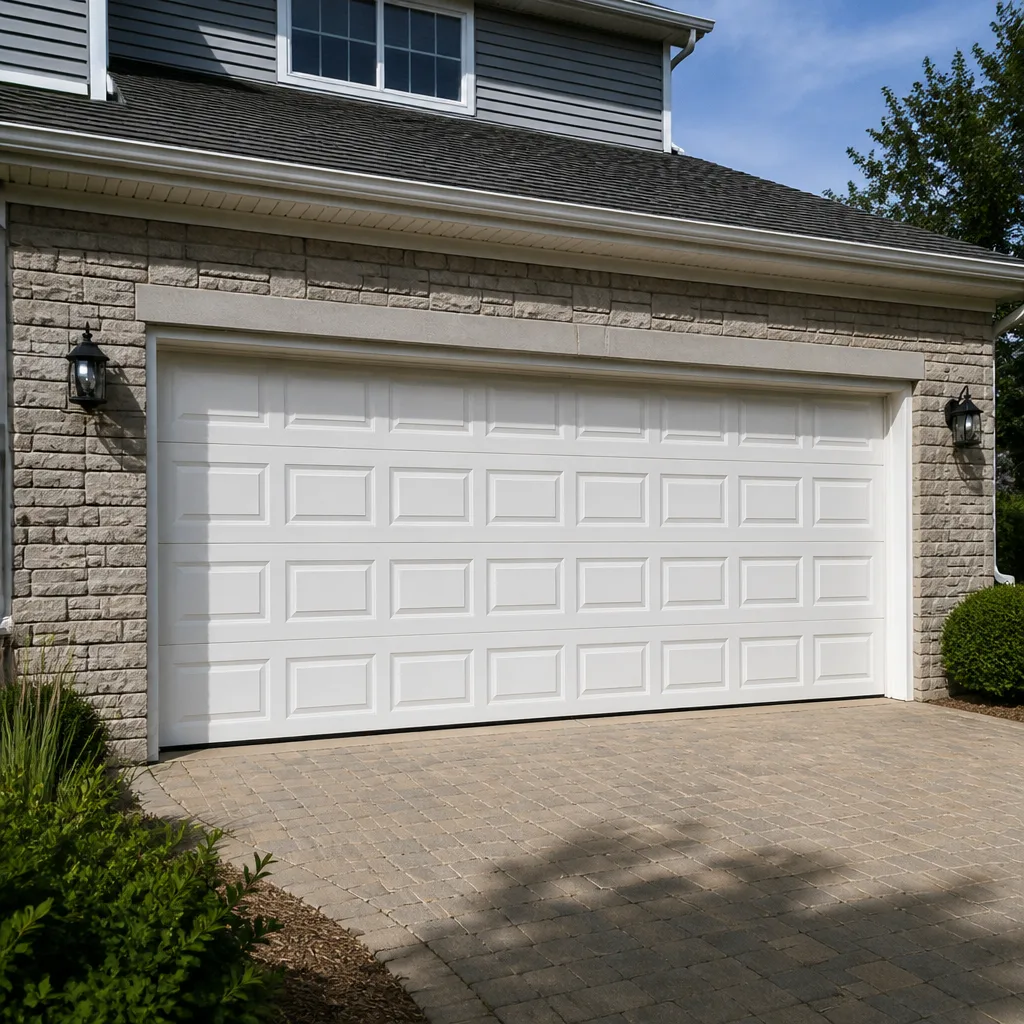 Raised-panel steel
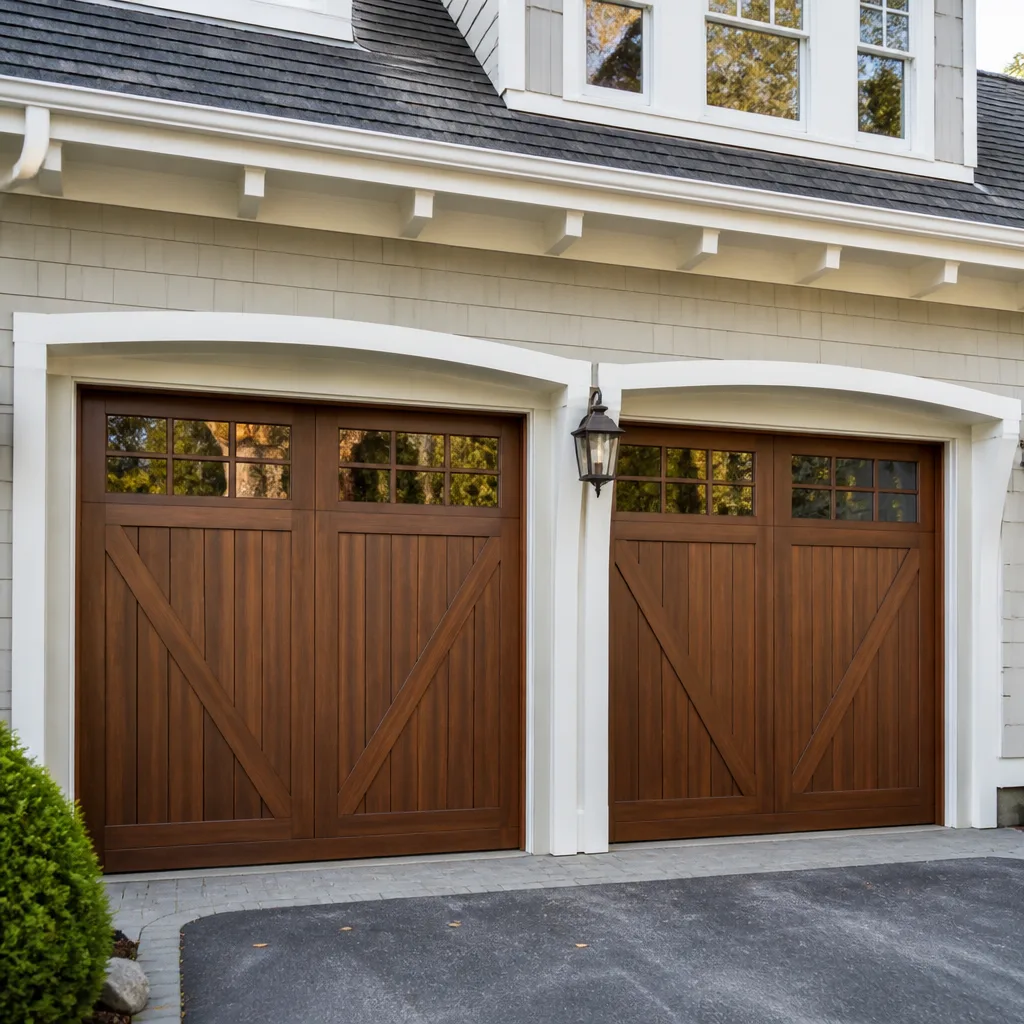 Carriage house
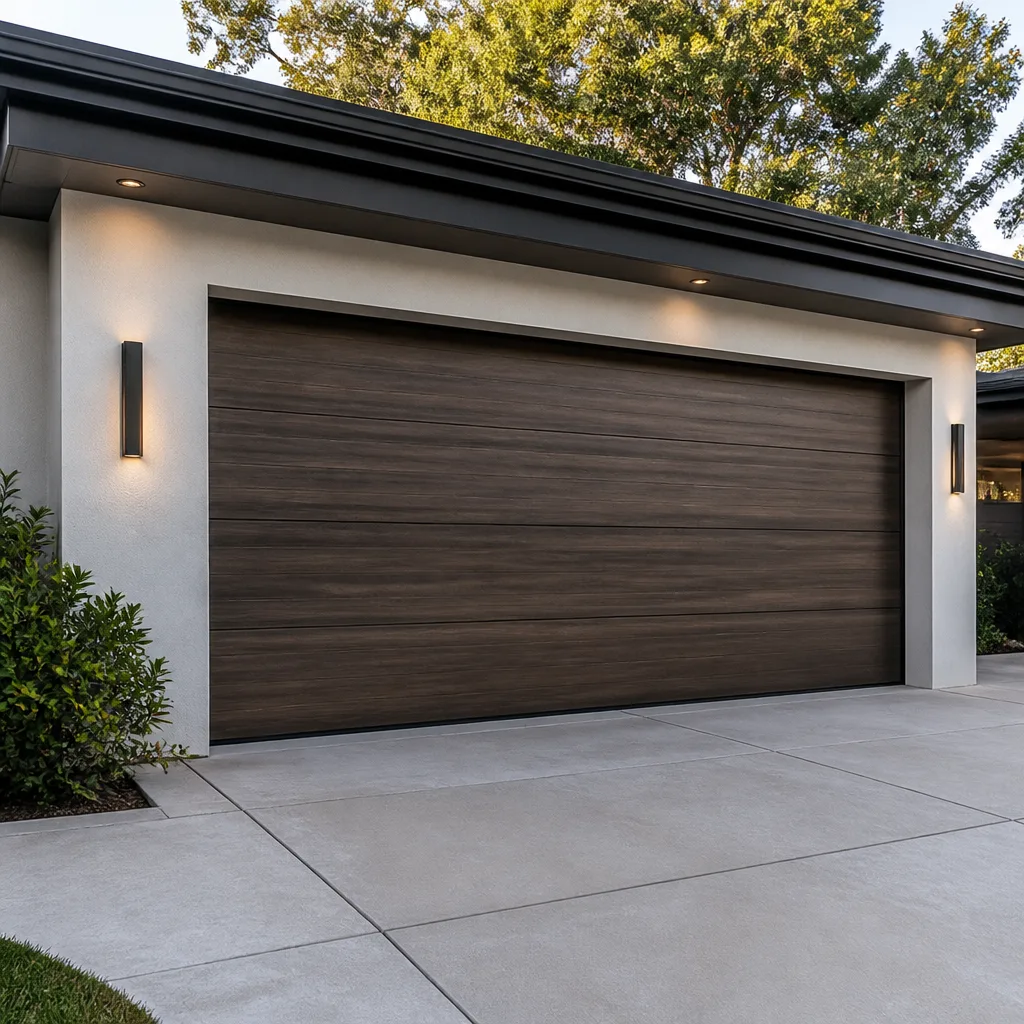 Modern flush
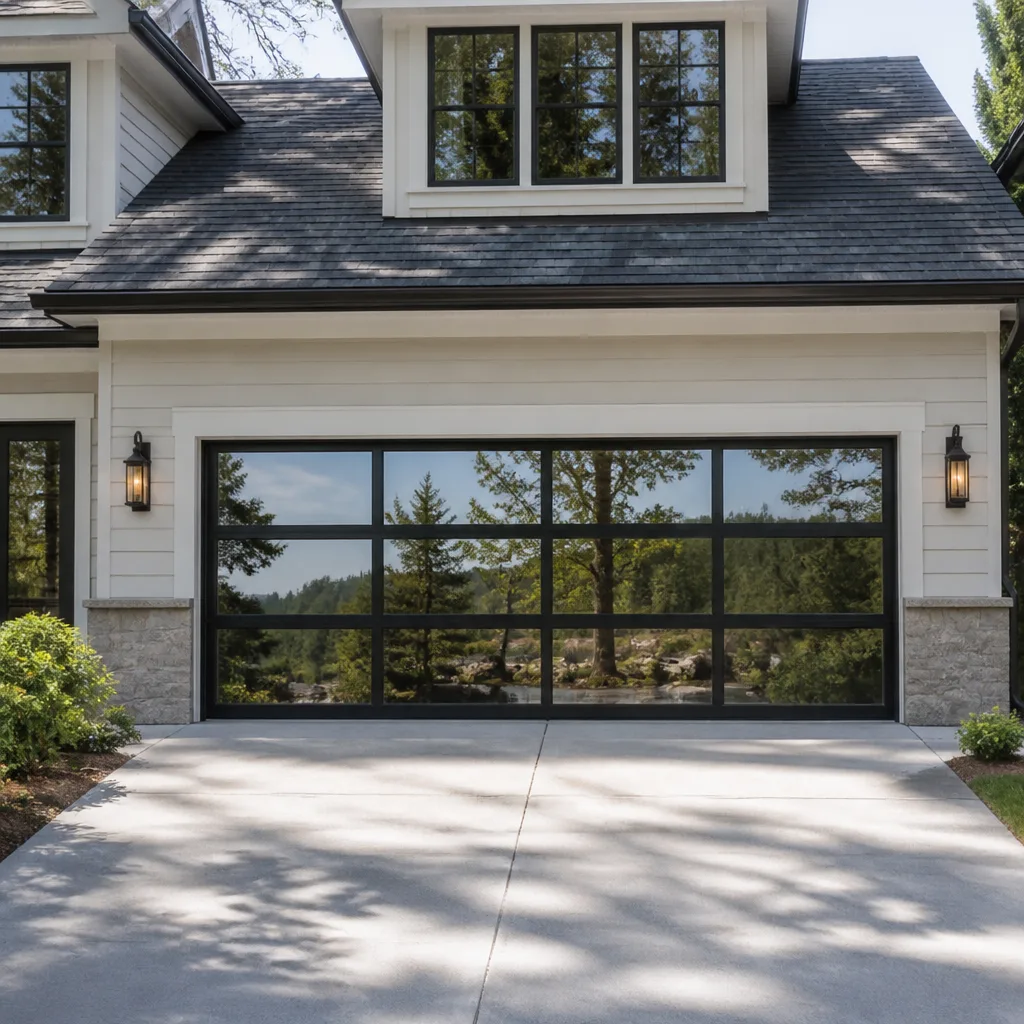 Full-view glass
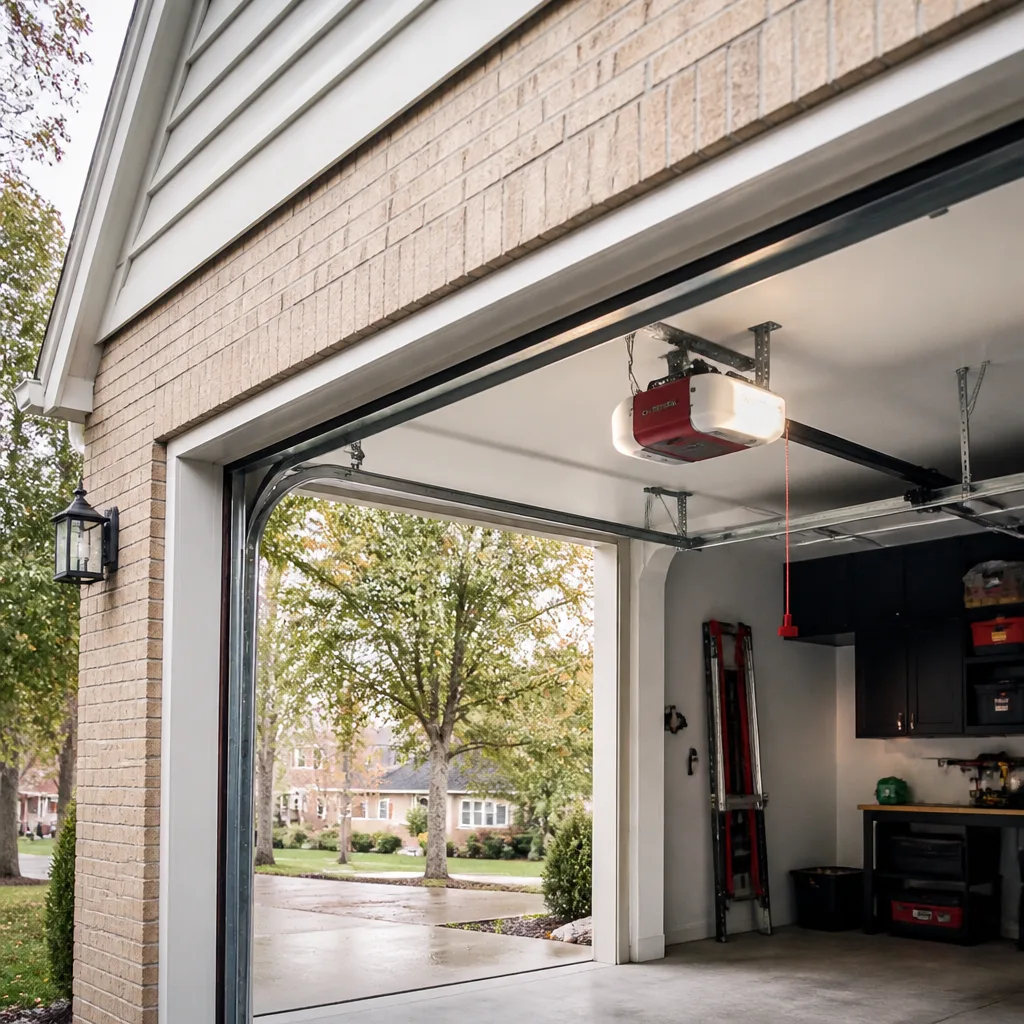 LiftMaster openers
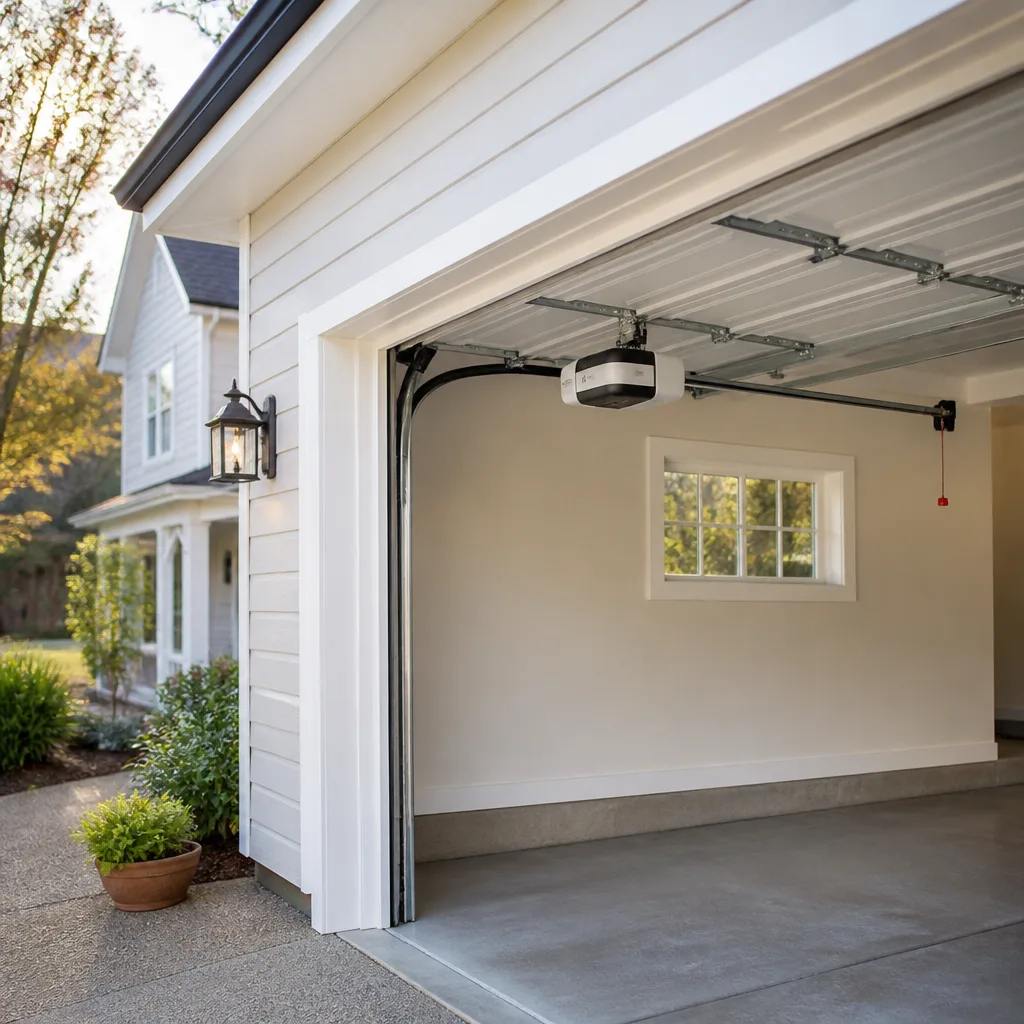 Chamberlain openers
Full 25-point door and opener safety check with every visit - springs, cables, rollers, tracks, and your LiftMaster or Chamberlain opener included
You get a price before we start. It does not change when the pro arrives.
Get your free estimateGarage Door Warning Signs: A Pompano Beach Homeowner’s Reference Guide
A garage door that is “a little slow” on a cold morning is a minor annoyance in Ohio. In Pompano Beach, that same hesitation in August heat usually means a torsion spring is close to snapping. Heat, humidity, and the daily expansion and contraction of South Florida afternoons change which parts fail first and how those failures announce themselves. This guide maps each symptom you’ll hear or see to its likely cause and urgency level, so you know what can wait and what needs a call today. We’ve worked on thousands of doors in Pompano Beach, and the patterns below show up again and again.
Quick Answer
The most common garage door warning signs in Pompano Beach are loud grinding or popping at the start of travel, a door that hesitates near the floor, visible rust along the springs or cables, opener remotes that only work up close, and any door that reverses for no clear reason. Springs and cables are the safety-critical parts; cosmetic scuffs and paint fade are not. If you hear a single loud pop followed by a door that won’t lift, stop operating it and call a professional.
Styles & brands we work with
- Raised-panel steel
- Carriage house
- Modern flush
- Full-view glass
- LiftMaster openers
- Chamberlain openers
Table of Contents
- What Does Each Garage Door Noise Actually Mean?
- How Rust and Humidity Signal Spring or Cable Failure
- Balance Problem or Opener Problem? How to Tell
- Cosmetic Warning Signs vs. Safety Hazards
- Why a Door That Hesitates at the Bottom Is a Liability
- Opener Warning Signs You Shouldn’t Ignore
- Seasonal and Monthly Checks for Pompano Beach Doors
- When to Call a Professional
What Does Each Garage Door Noise Actually Mean?
The sound your door makes in the first two seconds of travel tells you more than almost anything else. In Pompano Beach, where garage doors open an average of several times a day and the hardware cycles through intense afternoon heat, noises tend to progress in a predictable order. Match what you’re hearing against the list below to find the likely cause.
- Grinding at startup: Worn nylon rollers or dry hinges are the usual culprits. Left alone, grinding grinds the tracks too, and uneven wear can force the opener to strain. This is a routine fix, but don’t let it run for weeks.
- High-pitched squealing: Rollers or a torsion spring lacking lubrication. In Pompano Beach humidity, lubrication breaks down faster than in dry climates, so a door that was quiet last spring can turn shrill by summer.
- A single loud pop or bang: A torsion spring has snapped or a cable has slipped off a drum. This is the one sound you should treat as a stop sign. Don’t run the opener.
- Rattling on the way up: Loose hardware, worn hinges, or a door panel that’s out of alignment. Frequently caused by a bend in the horizontal track.
- Rhythmic thumping: A door that has gone off-balance. One cable has stretched or a spring has lost tension, and the opener is fighting the weight.
- Clicking from the opener housing: A failing gear or stripped sprocket inside the unit, common on older Craftsman and LiftMaster models we see across Pompano Beach.
If you can put your ear within a foot of the door and hear nothing but a smooth hum, your door is probably fine. If you can hear it in the kitchen, it’s time for a look.
How Rust and Humidity Signal Spring or Cable Failure
In our experience, humidity causes hardware to fail in a pattern that most generic guides don’t mention. Springs and cables don’t usually snap on a dry mild morning; they fail after weeks of humidity-driven oxidation has thinned the metal and stiffened the wire. Pompano Beach sits squarely in that pattern. When the torsion spring loses a section of its protective coating, the wire underneath begins to pit. Once pitting starts, the spring has measurably less strength, and the fatigue failure that follows is sudden.
Here’s what to look at on your own door:
- Inspect the spring coil for orange pitting or white powdery residue. Rust on a torsion spring is not cosmetic, because the wire is under constant tension and pitting is where it breaks.
- Look at the cables, especially where they wind around the drums. Frayed strands, dark discoloration, or a kink means the cable has lost integrity.
- Check the bottom brackets and hinges for rust bloom. Heavy rust on a hinge or bracket can seize a roller and force the opener to work harder than designed.
- Run a finger along the track’s inside edge. Gritty brown residue means rust is abrading the rollers every time the door opens.
Rust on the door panels of a Clopay or Amarr is usually cosmetic. Rust on the spring wire, the drums, or the cables is a safety signal. Older Wayne Dalton doors we see across Pompano Beach often show spring corrosion before the paint on the panels ever fades.
Balance Problem or Opener Problem? How to Tell
A common call we take in Pompano Beach is for a “broken opener” that turns out to be a door that needs rebalancing. The two problems feel similar from the driver’s seat, but they need different fixes, and calling them by the right name saves you money. Balance problems come from the door itself: springs, cables, and hardware. Opener problems come from the motor, gears, or logic board.
Try this diagnostic safely, with the door closed and disconnected from the opener:
- Pull the manual release cord to disconnect the door from the opener. The door should stay put, not slam down.
- Lift the door by hand about halfway up. A balanced door will feel light, nearly weightless in the middle of travel.
- Let go of the door at the halfway point. A balanced door stays where you left it.
- Observe what it does next. If it slides down on its own, the springs are too weak. If it wants to rise, the springs are too strong. Either way, the door is out of balance.
- Reconnect the opener and drive the door with the remote. If the door now works smoothly in manual mode but fails under opener power, the fault is in the opener.
Rebalancing a torsion system involves high-tension wire and calls for the right tools and training. Don’t attempt to adjust the springs yourself; we’ve responded to more than a few DIY injuries on doors where the homeowner tried. If your Pompano Beach door fails the halfway test, treat it as a balance issue and get a pro’s eyes on it. Garage door repair for an out-of-balance door is usually a straightforward visit once we know which end of the system has failed. For the motor side of the diagnosis, our garage door opener repair service covers the brands you’ll actually find in Pompano Beach garages.
Cosmetic Warning Signs vs. Safety Hazards
Not every flaw on your door needs same-day attention. Some things that look alarming, like a scratch in the paint or a scuff on a bottom panel, are harmless. Others, like a sagging top section or a kinked cable, are liabilities for anyone who walks under the door. Knowing which is which helps you plan an actual repair rather than panic.
Cosmetic signs, which can usually wait for a scheduled visit:
- Paint fade or chalking on steel or aluminum panels
- Surface rust on the outer skin of a Wayne Dalton or Clopay door
- A dented bottom panel that still seals correctly
- Faded window inserts or cloudy glazing
- A door that rattles slightly but still runs fully balanced
Safety hazards, which should be treated as same-day:
- A torsion spring that has snapped
- A cable that has jumped the drum or shows broken strands
- Any door that reverses without obstruction, or fails the photo-eye safety test
- A door that sags visibly in the middle when closed
- Hinges that are separating from the panel or brackets pulling loose
- A gap in the sections that lets light or water through
- An opener that keeps running after the door has stopped
When in doubt, err on the side of caution. A door that sags six inches in the middle when it’s closed is not going to hold up in a storm.
Why a Door That Hesitates at the Bottom Is a Liability
A door that “works fine” until it reaches the last few inches of travel is a door that isn’t working fine. Hesitation at the bottom or top of travel almost always means the opener is encountering resistance the manufacturer never designed for. On a South Florida door, that resistance frequently comes from a bent track, a spring that has lost tension, or a bottom seal that has swollen and is dragging.
This matters more in Pompano Beach than in many places because storm season turns “the door mostly closes” into “the door doesn’t seal.” A swollen rubber bottom seal dragging on the floor will keep the door an inch off the ground, and that gap accelerates water intrusion during a heavy rain. A torsion spring that has lost just enough tension to slow the door for a month is the same spring that will snap during a storm when you’re least able to call for help.
Hesitation symptoms to watch for:
- The opener strains audibly in the last third of travel
- The door pauses and then finishes closing after a second
- The opener reverses once or twice before finally closing
- The door pauses when opening and requires a second press of the button
- You notice the opener straining on hot afternoons but not in the morning
If any of those match your door, we’d treat it as a real warning. Garage door opener repair might be part of the solution, but the underlying balance or track issue usually needs correcting first. The Pompano Beach neighborhoods closest to the Intracoastal and those just west of Dixie Highway see this pattern often, because afternoon humidity swings push the bottom seal and the spring through more cycles than an inland door does.
Opener Warning Signs You Shouldn’t Ignore
Openers fail more gracefully than springs, which gives you more time to act – if you know what to look for. In Pompano Beach, where garages often serve as the primary entrance and the car is inside, a dying opener is a real mobility problem. Call us before it’s an emergency, not after.
Watch for these signs:
- The remote only works when you’re within ten feet of the door. This usually means the opener’s radio board or battery is failing, not the remote itself. Test with a second remote first.
- You have to press the wall button twice. Failing logic board or a safety sensor that’s misaligned.
- The opener runs but the door doesn’t move. The trolley has disconnected or the drive gear is stripped.
- The opener ramps down noticeably under load. The capacitor or motor is aging, and the door may now be heavier than the opener was sized for.
- The safety sensors don’t stop the door. A photo-eye failure is a top safety hazard, regardless of the door’s age.
- Randomly reverses for no reason. Usually a sensor alignment issue, but sometimes a board fault.
- The opener hums but doesn’t open. Seized sprocket, failing capacitor, or the door is out of balance and stuck.
Multi-brand familiarity is worth something here. When we roll up on a Genie, a Chamberlain, or an older Craftsman, we generally know the failure pattern before we open the housing. That means fewer return trips and fewer “we’ll have to order that” conversations.
Seasonal and Monthly Checks for Pompano Beach Doors
The doors we see in Pompano Beach live through a different cycle than doors in colder markets. Between June and October, the door goes from cool and heavy in the morning to hot and slightly expanded in the afternoon. That daily swing, multiplied by a few hundred days of the year, produces the slow wear we see on springs, cables, and rollers. A simple check once a month catches most of it.
A realistic monthly routine:
- Listen with the door closed. Do you hear grinding, squealing, or popping during travel? Write it down.
- Look at the spring coil. Rust or wire thinning? Time to schedule a check.
- Test the balance every month using the halfway test above.
- Clean and lubricate rollers, hinges, and the torsion bar with a proper garage door lubricant – not WD-40, which strips existing grease.
- Test the safety reverse by placing a roll of paper towels in the door’s path. The door should reverse within a beat.
- Inspect the bottom seal for swelling, cracking, or separation from the panel.
- Check the photo-eye alignment by breaking the beam with your foot; the door shouldn’t close.
Once a year, get a professional look at the spring, cables, and opener gear. In Pompano Beach, mid-spring is a smart time to do that, before the summer strain cycle begins. That’s also a reasonable moment to talk about garage door installation if your door is nearing the end of its service life. Panels and hardware on a Wayne Dalton or Amarr can last twenty years, but the springs almost never do.
See the difference
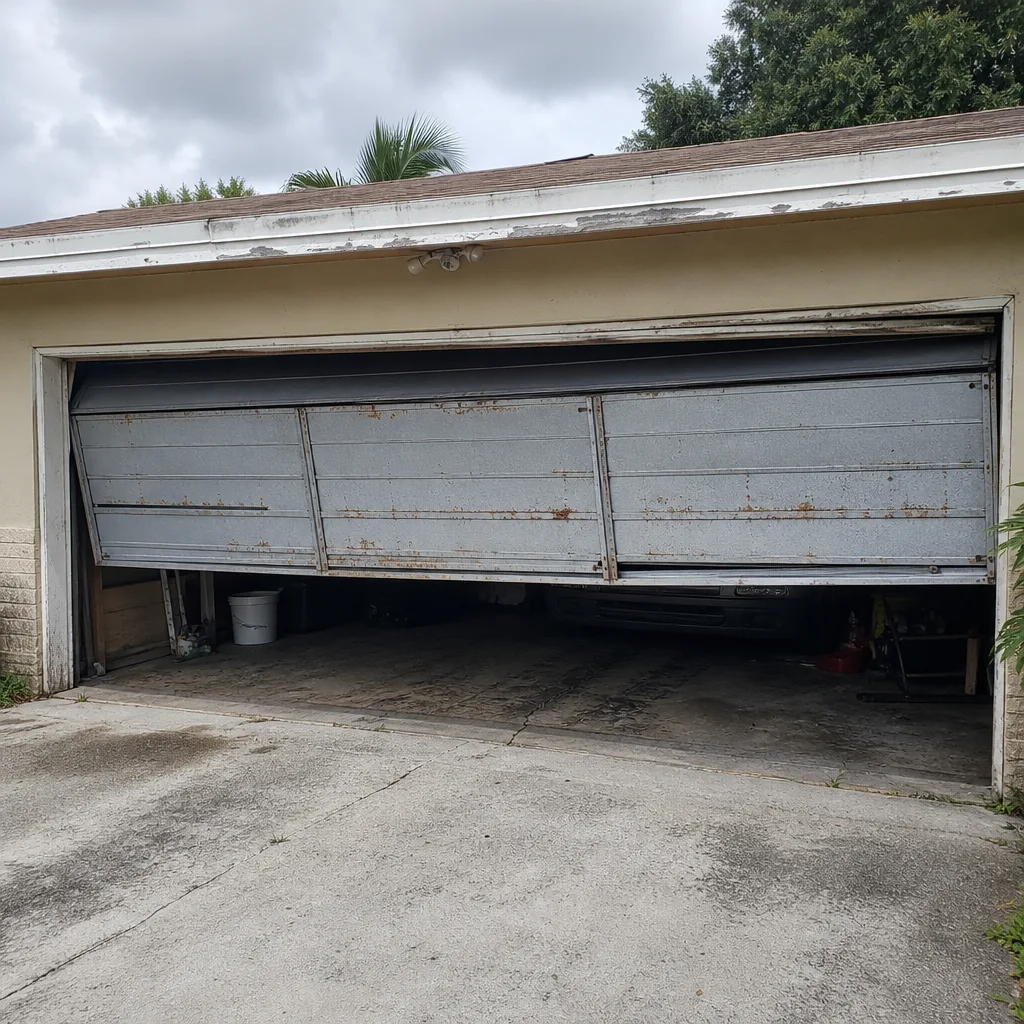 Before
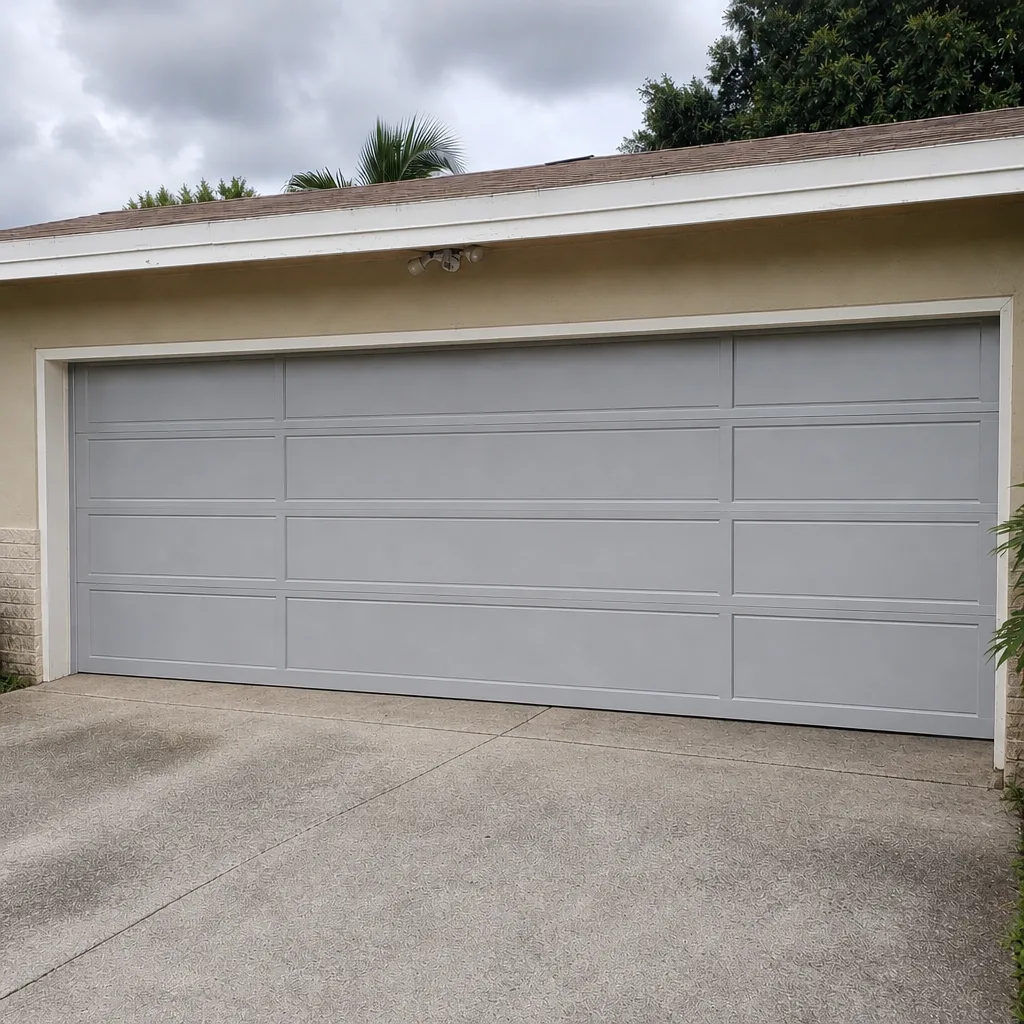 After
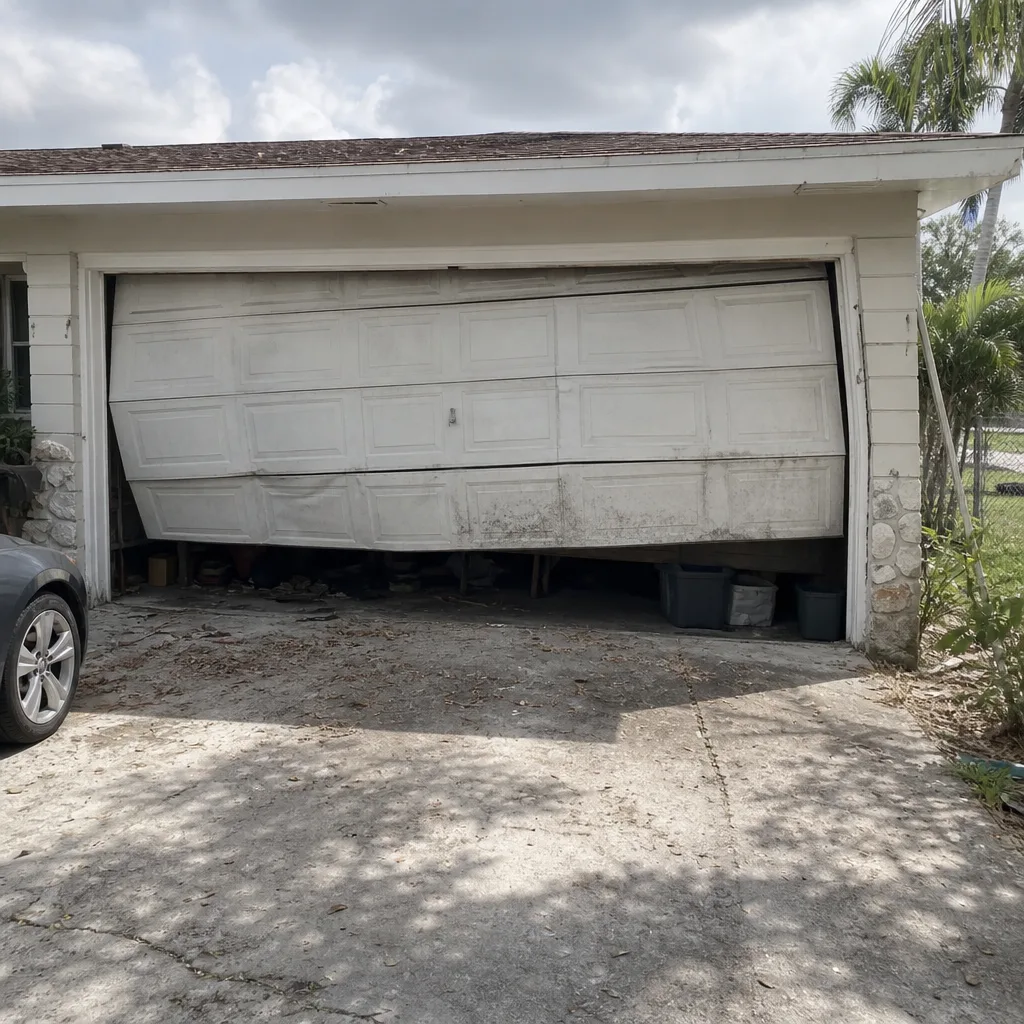 Before
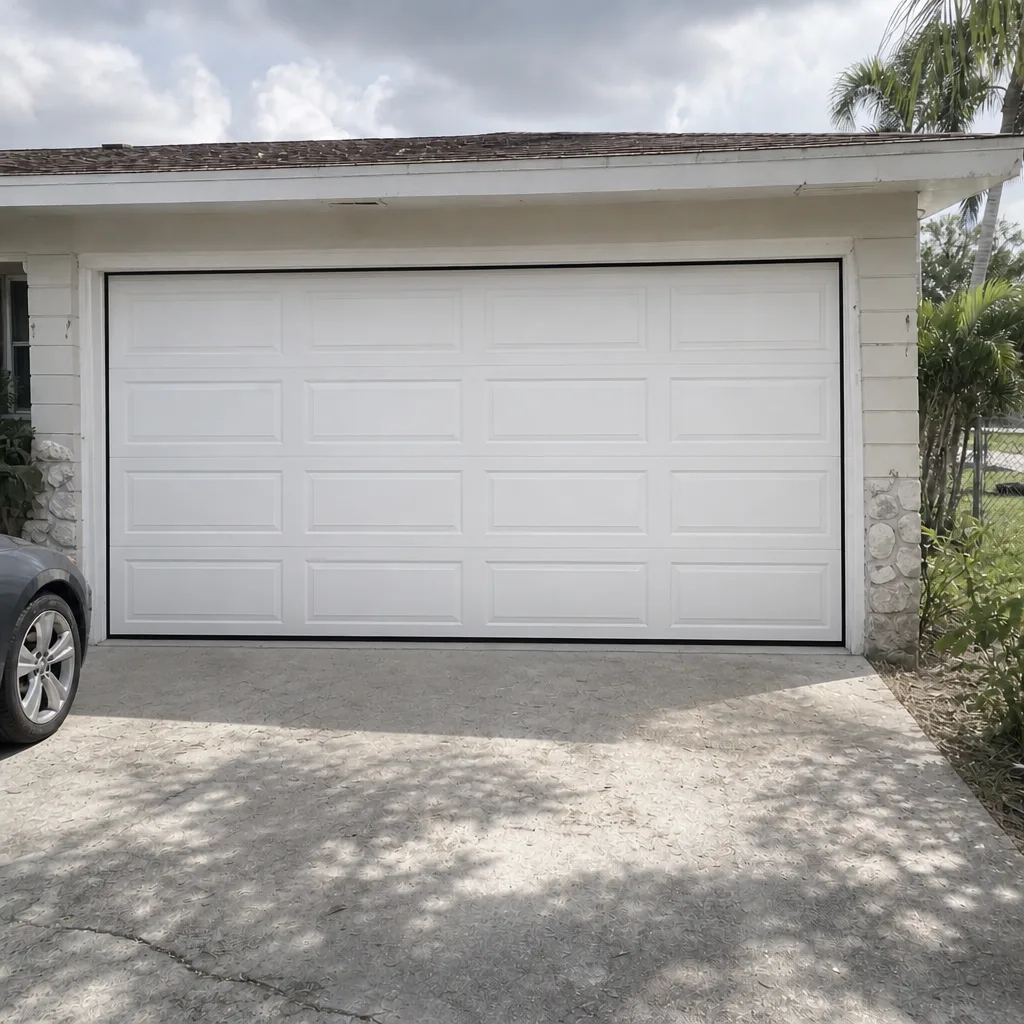 After
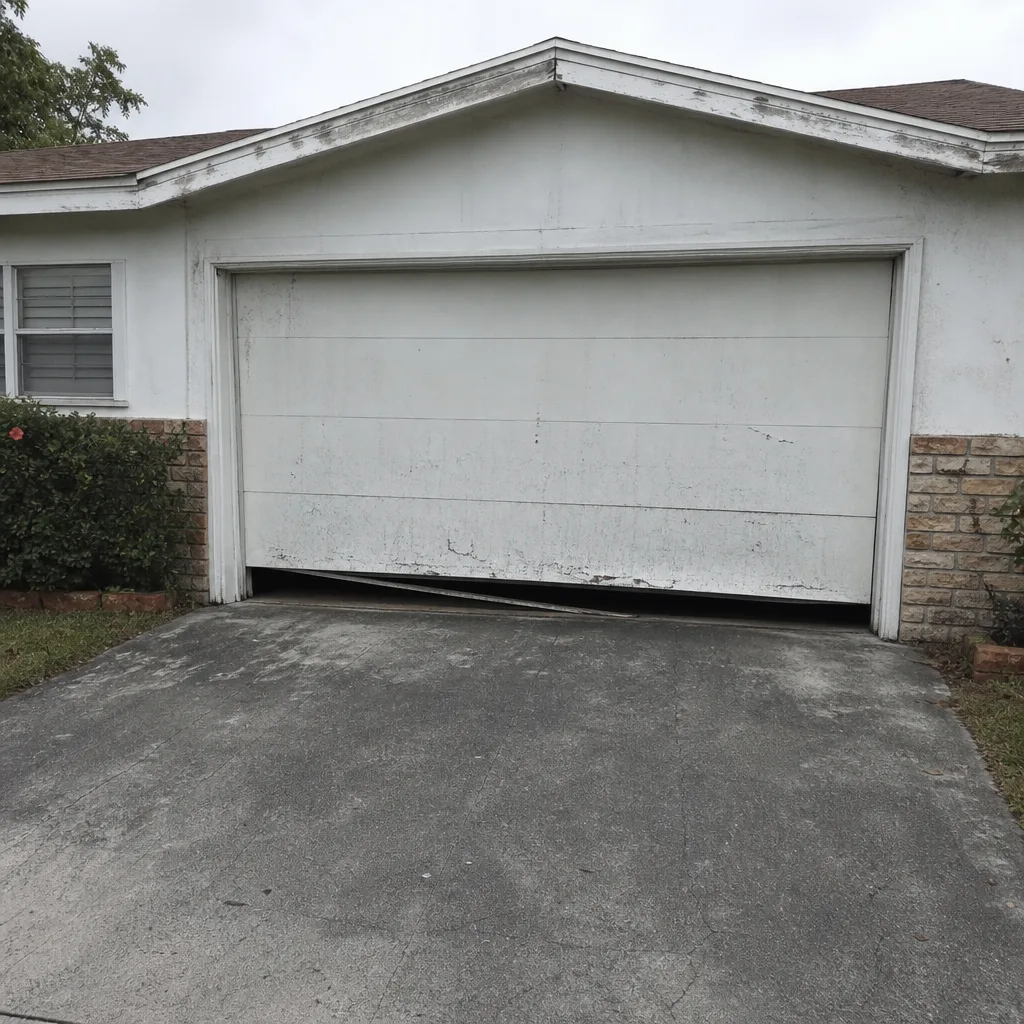 Before
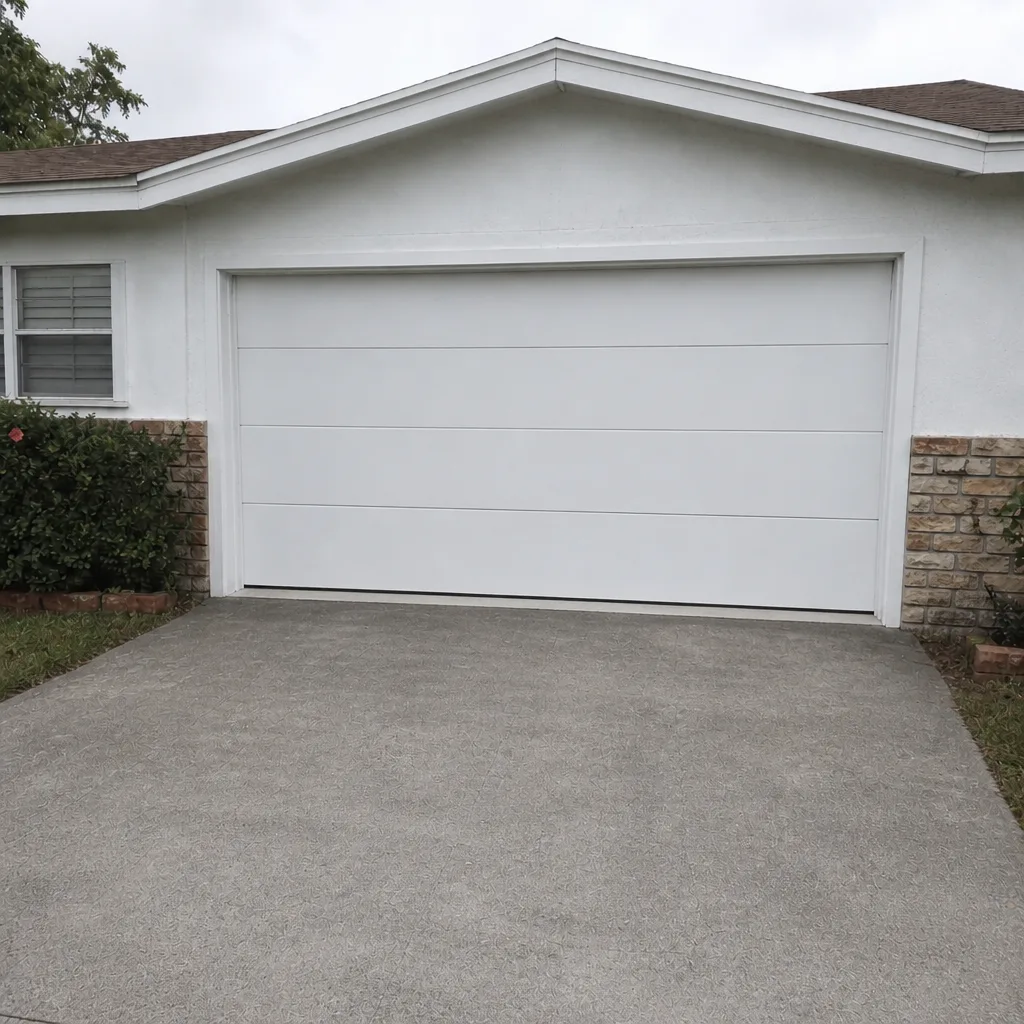 After
Common Mistakes to Avoid
- Treating a snapped spring as a “wait and see.” A snapped spring puts 100% of the door’s weight on the opener, which will burn the opener out within a few cycles. Don’t run the door at all; call for a spring repair.
- Bumping the opener’s sensitivity to force a door past a hesitation. This masks a balance problem while the safety reverse becomes unreliable. It’s one of the most common shortcuts we undo in Pompano Beach.
- Lubricating the tracks. Track rails need to be clean and dry so the rollers can glide; grease attracts grit and gum. Lubricate rollers, hinges, and the spring bar, not the tracks.
- Replacing only one spring of a matched pair. When one torsion spring breaks, its twin has taken the same wear and will typically fail within weeks. Replacing both together saves a second call.
- Ignoring the bottom seal through a rainy season. A swollen seal holds your door off the ground and lets water in. Left alone, it warps panels and rusts hardware.
- Using a handyman for spring or cable work. High-tension torsion work is not a general repair. It calls for specific tools and specific training.
- Skipping the opener brand when calling. Even though we handle eight major brands, knowing it’s a LiftMaster, Genie, or Craftsman up front speeds the visit.
When to Call a Professional
Some garage door warning signs can wait for a scheduled visit. Others are safety situations and shouldn’t. Call a professional if any of the following is true: the spring has snapped; a cable has jumped or frayed; the door reverses without obstruction; the door sags in the middle when closed; the opener runs but the door doesn’t; a hinge is separating from a panel; or the door is more than a hands-width off the ground when closed. Also call if you’re facing an emergency after standard hours, since most failures don’t schedule themselves conveniently. Our technicians have up to 10 years of experience, and we handle the full job – repair, spring, opener, or new install – with no subcontracting. Pompano Beach Garage Door Repair Pros offers free estimates in Pompano Beach – call (844) 840-1565. The price is always quoted and agreed before any work starts.
Frequently Asked Questions
It sounds like a single loud pop or bang, often followed by the door refusing to lift. The sound is the torsion spring snapping, and it may set off a car alarm or be heard across the house. Don’t run the opener after that sound; call for spring repair.
No. Torsion springs are under extreme tension, and a do-it-yourself replacement can cause serious injury. The tools and training required aren’t available to a homeowner, and the risk isn’t proportional to the savings. Call a professional – our spring repair visit is one of our most common services in Pompano Beach.
Heat causes metal to expand and rubber to soften, so a margin that’s tight in the morning can disappear by 3 p.m. In our experience, this pattern often points to a marginal spring, a swollen bottom seal, or a track that’s rubbing in the heat. It’s worth a professional look before it becomes a full failure.
Use the halfway test: disconnect the door from the opener and lift it by hand to the halfway point. If it slides down or drifts up on its own, the balance is off. If it holds and the opener still struggles, the opener is the problem. Call (844) 840-1565 for an exact quote – estimates are free.
The local pro we connect you with is licensed and insured as Florida requires. We’ll confirm that on the call and show it in writing with the estimate.
No. The written estimate is the price, and it’s agreed before any work starts. If we find something under the hood that changes the scope, we come back and quote that separately before proceeding. You won’t get an invoice bigger than the quote.
For emergencies inside service hours, we aim to be there fast – same day when possible. Spring failures don’t wait for business hours, and our emergency service is real, not an answering machine with a callback in the morning.
Look on the back panel or under the light lens for a manufacturer label. LiftMaster, Chamberlain, Genie, and Craftsman are the most common in Pompano Beach homes; if the label is worn, our technicians can usually identify it on sight and confirm from the wall-control style.
The Bottom Line
Garage door failures rarely happen without warning. Grinding, popping, hesitation at the bottom of travel, rust on the spring coil, and reverses without obstruction are the signals most worth your attention. In Pompano Beach, the warning signs often show up first in the spring wire and the bottom seal because of the heat and humidity cycle the door runs through all year. If you take a look at the door once a month, match what you hear against the list above, and call when a symptom is on the safety side of the line, you’ll avoid most emergencies before they start. From your opener remote up to a full installation, we work on the door you have, across eight brands, with one call and one written price.
If any of the warning signs in this guide describe your door, we can take a look. Call (844) 840-1565 for a free estimate. Our technicians have up to 10 years of experience, we work on the door you have, and the price is quoted and agreed before any work starts. For an overview of everything we handle in Pompano Beach, start with Pompano Beach Garage Door Repair Pros.
Written by the team at Pompano Beach Garage Door Repair Pros.